PRP Therapy in Lighthouse Point, FL
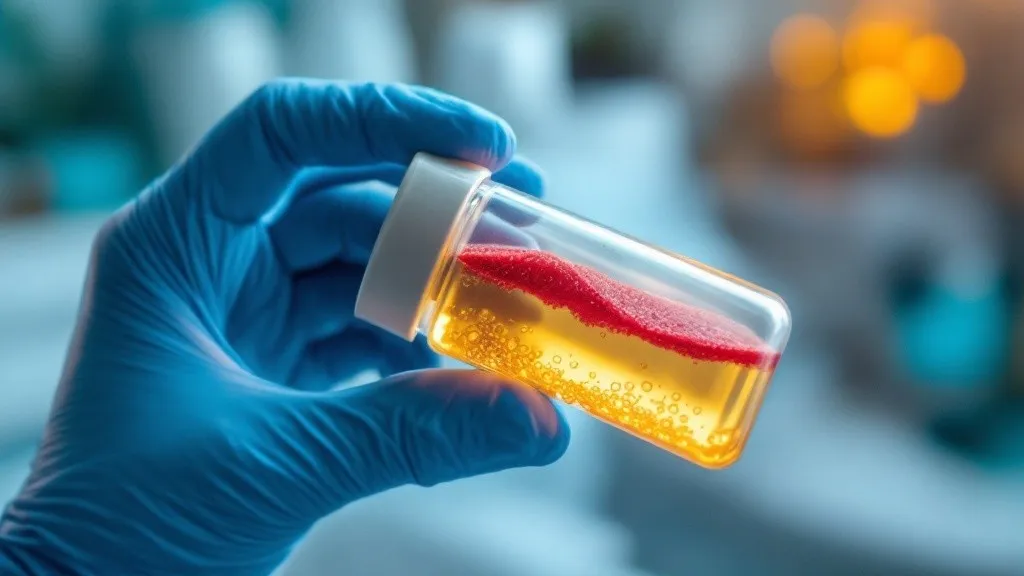
Platelet-rich plasma therapy is an autologous regenerative procedure that concentrates platelets from a patient's own blood and reintroduces them into an injury site to accelerate tissue repair using the body's own growth factors.
Because the source material is the patient's own blood, PRP therapy carries no risk of rejection, allergic reaction to foreign cells, or transmission of donor-derived pathogens. The entire process — blood draw, centrifuge processing, and injection — happens in a single clinic visit. That simplicity and safety profile make PRP one of the most accessible entry points into regenerative medicine, and one of the most studied.
At Rebuild Regen Medical Clinic, PRP therapy is performed by Elizabeth Celestin, APRN-BC, using a standardized centrifuge protocol that maximizes platelet concentration. It is available as a standalone treatment for orthopedic conditions, hair restoration, and ED (P-Shot), or as a component of combined biologic protocols alongside stem cells or exosomes.
What PRP Is — Platelets, Growth Factors, Autologous Source
Blood contains four primary components: red blood cells, white blood cells, plasma, and platelets. Platelets are small cell fragments best known for their role in clotting. Less widely known is their second function: growth factor delivery.
When platelets arrive at a site of tissue damage, they activate and release a payload of growth factors including platelet-derived growth factor (PDGF), transforming growth factor-beta (TGF-beta), vascular endothelial growth factor (VEGF), insulin-like growth factor (IGF), and epidermal growth factor (EGF). These growth factors initiate and accelerate the cellular repair cascade: recruiting stem cells to the site, stimulating collagen synthesis, promoting angiogenesis (new blood vessel formation), and modulating local inflammation.
Platelet-rich plasma is simply blood with the platelet concentration amplified. Normal whole blood contains approximately 150,000 to 400,000 platelets per microliter. A well-processed PRP preparation concentrates this to 1 million or more platelets per microliter — a 3x to 7x elevation depending on the centrifuge protocol. More platelets at the injury site means a more concentrated growth factor signal, which means a stronger and faster recruitment of the body's natural repair response.
This mechanism makes PRP fundamentally different from cortisone. Cortisone suppresses inflammation downstream, which reduces pain but does not address the underlying tissue damage. PRP introduces growth factors that recruit repair. For many patients, particularly those with tendon and ligament conditions that have a poor blood supply and thus slow natural healing, PRP provides a biological signal the tissue cannot generate on its own.
The Centrifuge Process — Platelet Concentration and Why It Matters
The quality of PRP therapy depends heavily on the processing protocol. Not all PRP is equivalent. The platelet-to-red-cell ratio, the presence or absence of white blood cells, and the final platelet concentration all affect the growth factor payload and the clinical outcome.
At Rebuild Regen, the PRP centrifuge protocol follows these steps:
1. Blood draw: 30 to 60 mL of blood is drawn from the patient's arm and collected in specialized tubes containing anticoagulant to prevent premature activation of the platelets.
2. First centrifuge spin: The blood is spun at a calibrated speed and duration to separate red blood cells (heaviest, settle to the bottom) from plasma and platelets (rise to the top). The red blood cell layer is discarded.
3. Second centrifuge spin: The plasma-platelet layer undergoes a second spin at higher speed to further concentrate the platelets from the plasma. The resulting platelet-poor plasma (PPP) is removed, leaving a concentrated platelet pellet.
4. Resuspension: The platelet concentrate is resuspended in a small volume of remaining plasma, producing the final PRP preparation — a concentration typically 3x to 7x above baseline platelet levels.
5. Activation (optional): In some protocols, the PRP is activated with calcium chloride or thrombin immediately before injection to trigger immediate growth factor release at the target site. Elizabeth selects the activation method based on the application.
The entire processing step takes approximately 30 minutes. The resulting PRP is drawn into a syringe and injected at the treatment site during the same visit.
Conditions Treated — Tendon, Cartilage, Ligament, Hair, ED
PRP at Rebuild Regen is applied across five primary orthopedic indications plus two non-orthopedic applications:
Knee conditions: Knee osteoarthritis with documented cartilage degeneration, patellar tendinopathy, and post-surgical recovery. PRP injected into the knee joint provides growth factors to cartilage (which is avascular and heals slowly) and reduces the chronic inflammatory environment that accelerates degeneration.
Shoulder conditions: Rotator cuff tendinopathy, partial rotator cuff tears, and shoulder bursitis. PRP delivers growth factor stimulus to tendon tissue that has limited blood supply and poor self-repair capacity.
Lateral and medial epicondylitis (tennis elbow / golfer's elbow): A classic PRP indication with good evidence. Chronic tendinopathy at the elbow occurs because the tendon tissue has insufficient blood flow to complete the repair process naturally. PRP breaks this cycle by delivering concentrated growth factors directly to the degenerated tissue.
Plantar fasciitis and Achilles tendinopathy: Plantar fascia injections with PRP for chronic plantar fasciitis that has not responded to conservative care. Achilles tendon injections for chronic Achilles tendinopathy.
Hip conditions: Hip labral conditions, hip bursitis, and early-stage hip osteoarthritis.
Hair restoration: Scalp injection with PRP for androgenetic alopecia (male and female pattern hair loss) and post-partum shedding. Growth factors in PRP stimulate follicle activity and extend the anagen (growth) phase. Multiple sessions are standard; results are visible at 3 to 6 months.
P-Shot (Priapus Shot) for ED: PRP injected into the corpus cavernosum of the penis to promote angiogenesis and tissue repair in vascular-component erectile dysfunction. The P-Shot is part of the ED treatment protocol at Rebuild Regen, alongside acoustic wave therapy and peptide protocols. Learn more about ED treatments.
The Procedure — Blood Draw, Processing, Injection, Recovery
The PRP procedure at Rebuild Regen is performed in a single visit:
Visit duration: 60 to 90 minutes total including blood draw, centrifuge processing, and injection.
Blood draw: Elizabeth or clinical staff draws 30 to 60 mL from the antecubital vein. This is comparable to routine blood donation — most patients report minimal discomfort.
Processing: 20 to 30 minutes in the centrifuge while you remain in the treatment room. Elizabeth reviews the protocol details and post-procedure instructions during this time.
Injection: The treatment site is cleaned and, where clinically appropriate, a topical numbing agent or local anesthetic is applied. The PRP is injected at the target site. For orthopedic injections, ultrasound guidance may be used to confirm accurate placement.
Recovery: Most patients return to normal light activity the same day. Higher-exertion activities (running, heavy lifting) are typically restricted for 48 to 72 hours to allow the growth factor cascade to initiate without mechanical disruption. Anti-inflammatory medications (NSAIDs) are stopped in the days before and after treatment, as they interfere with the inflammatory signaling that PRP depends on.
Follow-up: A follow-up appointment is scheduled at 4 to 6 weeks. Many conditions benefit from a series of 2 to 3 PRP sessions spaced 4 to 6 weeks apart for maximum effect.
Is PRP the Right Starting Point or Is a Biologic Upgrade Needed?
PRP is an excellent starting point for many patients because of its safety profile, accessibility, and the depth of its clinical evidence base. For early to moderate orthopedic conditions, it is often the appropriate first biologic intervention.
For more advanced presentations — significant cartilage loss, multi-year chronic tendinopathy, systemic inflammatory conditions, or complex neuropathy — a stronger biologic such as DayZero™ stem cells or exosome therapy provides a more robust paracrine signaling effect. The decision comes down to the clinical picture established at consultation.
PRP and stem cells are also frequently combined in the same protocol, using PRP's growth factor payload to prime the local environment before or alongside MSC introduction. Elizabeth designs combined protocols when the clinical picture supports them.
Frequently Asked Questions
How long does PRP take to work?
PRP therapy initiates a biological repair cascade that takes time to manifest as clinical improvement. Early signs of response typically appear at 4 to 6 weeks. The growth factor-driven repair process continues for 3 to 6 months after injection. Results are gradual, not immediate — PRP is not a pain blocker. Patients who have managed expectations about this timeline report higher satisfaction with outcomes.
How many PRP sessions are typically needed?
Most orthopedic conditions benefit from a series of 2 to 3 sessions spaced 4 to 6 weeks apart. Hair restoration typically requires 3 to 4 sessions initially, with annual maintenance. Chronic tendinopathy may respond to a single well-executed session in some patients. The protocol is determined at consultation based on your specific condition and severity.
What is the difference between PRP and cortisone?
Cortisone is a corticosteroid that suppresses inflammation systemically and at the injection site. It reduces pain within days but does not address the underlying tissue damage. Repeated cortisone use can weaken tendon and cartilage tissue over time. PRP introduces growth factors that recruit the body's repair cascade to the injury site, addressing the tissue damage rather than masking the symptom. PRP takes longer to produce pain relief but supports actual tissue regeneration rather than suppression.
Does PRP work for knee arthritis?
PRP therapy for knee osteoarthritis has a growing evidence base. In mild to moderate knee osteoarthritis (Grade 1 to 3 on the Kellgren-Lawrence scale), PRP injections have demonstrated improvements in pain scores and functional outcomes in multiple controlled trials, with effects that persist longer than cortisone. In severe end-stage arthritis (Grade 4, bone on bone), PRP's ability to influence the cartilage environment is limited and surgical consultation is more appropriate.
Can I take ibuprofen before or after PRP?
NSAIDs (ibuprofen, naproxen, aspirin) suppress the prostaglandin-mediated inflammatory signal that PRP relies on to initiate repair. Elizabeth advises stopping NSAIDs at least 5 days before treatment and for 2 to 4 weeks after. Acetaminophen (Tylenol) is acceptable for pain management during this period. This is one of the most important compliance points in PRP protocols and is explained thoroughly at the consultation visit.
When PRP Is Insufficient and a Stronger Biologic Is Indicated
PRP relies on the growth factors within your own platelets. In patients who are older, on certain medications, or have systemic conditions that compromise platelet quality or count, the growth factor payload may be reduced. In these cases, allogeneic biologics such as DayZero™ stem cells or exosomes provide the cellular and paracrine signaling that PRP cannot. Advanced joint degeneration, systemic inflammatory disease, or neuropathic conditions also typically require a more sophisticated biologic approach than PRP alone can provide. Elizabeth addresses these distinctions at consultation and recommends the appropriate escalation when the clinical picture supports it.
Rebuild Regen Medical Clinic 3320 N Federal Hwy #101, Lighthouse Point, FL 33064 (954) 953-4208 | rebuildregenmedical.com
Schedule a PRP Consultation | Compare PRP and Stem Cell Therapy
Ready to start your recovery?
Schedule a consultation at Rebuild Regen Medical Clinic in Lighthouse Point, FL.