Shockwave Therapy (Acoustic Wave) in Lighthouse Point | Chattanooga Intelect RPW 2
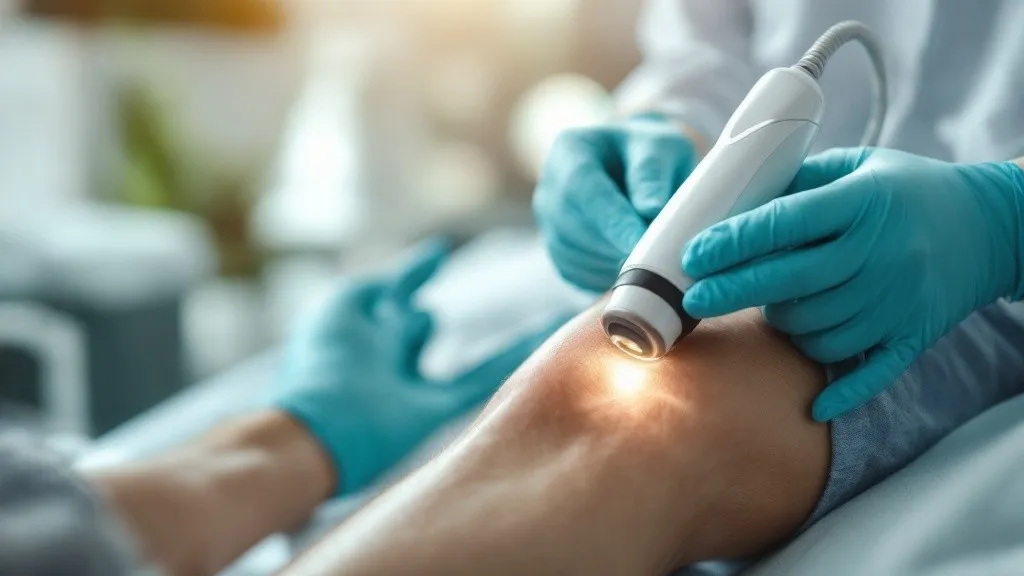
Shockwave therapy is a non-invasive orthopedic treatment that delivers high-energy acoustic pressure waves to injured soft tissue, stimulating collagen synthesis, increasing local blood flow, and breaking down calcific deposits.
Despite the name, shockwave therapy does not use electricity or shocks in any clinical sense. It uses acoustic pressure waves — mechanical sound waves at therapeutic energy levels — delivered through a transducer head applied to the skin over the target tissue. The energy transmitted through the tissue produces a biological repair response that the tissue's own limited blood supply cannot naturally trigger.
At Rebuild Regen Medical Clinic, shockwave therapy is delivered using the Chattanooga Intelect RPW 2 — a radial pressure wave (RPW) device with calibrated energy settings, applicator selection, and frequency adjustment across the therapeutic range. It is used for plantar fasciitis, Achilles tendinopathy, calcific shoulder tendinitis, tennis and golfer's elbow, and erectile dysfunction (low-intensity protocol).
What Shockwave Therapy Is — Acoustic Pressure Waves and Tissue Response
Shockwave therapy is also called acoustic wave therapy, and the two names describe the same treatment: the device delivers acoustic pressure waves into the tissue. Patients researching acoustic wave therapy in Lighthouse Point, Pompano Beach or Oakland Park are looking at the treatment described on this page.
Radial pressure waves from the Chattanooga Intelect RPW 2 are generated by a ballistic mechanism: a projectile accelerated by compressed air strikes a transmitter tip, creating a pressure pulse that radiates radially through the tissue from the application point. The wave travels through soft tissue, losing energy with depth — concentrating its therapeutic effect in the superficial and mid-depth tissue where chronic tendinopathy and calcific deposits typically reside.
The cellular responses to this acoustic energy input:
Collagen synthesis stimulation: Fibroblasts in tendon and fascia respond to shockwave-induced mechanical stress by upregulating collagen production. Chronic tendinopathy is characterized by disorganized, low-collagen scar tissue that lacks the structural strength of healthy tendon. Shockwave stimulates fibroblasts to produce organized collagen that rebuilds the tendon's structural integrity.
Angiogenesis: Shockwave waves increase VEGF expression and stimulate capillary ingrowth in the treated tissue. This is particularly relevant for conditions like plantar fasciitis and calcific tendinitis where poor vascularity is a primary reason the tissue cannot heal on its own.
Calcification breakdown: The mechanical energy of shockwave directly fragments calcium hydroxyapatite deposits in calcific tendinitis (calcium deposits in the rotator cuff or Achilles tendon). Fragmented calcification is resorbed by the body's immune cells.
Substance P depletion: Shockwave depletes substance P (a neuropeptide involved in pain transmission) at the treatment site, producing a neuromodulatory pain reduction that occurs independently of the tissue healing effect.
Conditions Treated
Plantar fasciitis: One of the strongest evidence indications for shockwave therapy. Chronic plantar fasciitis that has failed rest, stretching, orthotics, and cortisone injections responds to shockwave through stimulation of collagen repair and angiogenesis in the plantar fascia. Multiple controlled trials support this application.
Achilles tendinopathy: Both insertional (where the tendon attaches to the heel bone) and mid-portion Achilles tendinopathy are treated. Shockwave's collagen synthesis and angiogenesis effects directly address the degenerative tissue changes in chronic Achilles tendinopathy.
Calcific shoulder tendinitis: Calcium deposits in the supraspinatus tendon produce the combination of tendon disruption and inflammatory reaction. Shockwave mechanically fragments the deposits and stimulates the tissue repair process simultaneously.
Lateral and medial epicondylitis (tennis/golfer's elbow): Chronic tendinopathy at the elbow responds to shockwave for the same reasons as other tendinopathy indications — poor vascularity in tendon tissue, chronic degeneration, failure of natural healing. Shockwave re-initiates the repair cascade.
Erectile dysfunction (low-intensity protocol): The vascular component of ED involves endothelial dysfunction and reduced penile arterial inflow. Low-intensity shockwave (Li-ESWT) at the penile and perineal area stimulates angiogenesis and endothelial repair — the same mechanism as orthopedic shockwave applied to vascular tissue. See ED Treatments for the complete three-modality ED protocol.
The Equipment — Chattanooga Intelect RPW 2
The Chattanooga Intelect RPW 2 is a clinical-grade radial pressure wave device manufactured by DJO Global. It provides:
- Adjustable pressure settings from 1 to 5 bar
- Frequency adjustment from 1 to 22 Hz
- Multiple applicator heads for different treatment sites (D-ACTOR 20mm for large muscle groups, D-ACTOR 15mm for medium areas, D-ACTOR 10mm for precise smaller areas)
- Full digital display with session tracking
The device is designed for clinical use by trained practitioners and is differentiated from the consumer-grade "massage guns" marketed using similar acoustic terminology. The energy levels, frequency settings, and applicator design are calibrated for therapeutic tissue penetration and biological response — not superficial soft tissue release.
The Session — What It Feels Like, Number of Sessions, Recovery
During treatment: The Chattanooga RPW 2 applicator is pressed against the treatment site with ultrasound gel as a coupling medium. The radial waves produce a tapping/hammering sensation in the tissue. For most patients, this is tolerable to mildly uncomfortable — active tendinopathy sites feel the treatment more. Elizabeth adjusts the pressure and frequency settings to the patient's tolerance.
Session duration: 3 to 5 minutes per treatment site at standard pulse counts (2,000 to 3,000 pulses per site). A session treating one or two areas runs 10 to 20 minutes total.
Number of sessions: Most tendinopathy conditions are treated with 3 to 6 sessions spaced 7 to 10 days apart. The weekly spacing allows the biological repair response triggered by each session to progress before the next. Some conditions benefit from additional sessions; others show full response at 3.
Recovery: Mild soreness at the treatment site for 24 to 48 hours after each session is common and indicates a normal tissue response. Ice is appropriate for comfort. Strenuous loading of the treated area is avoided for 48 hours post-treatment.
Is Shockwave Therapy the Right Intervention Before Considering Biologics?
Shockwave therapy is a strong first-line or concurrent option for the tendinopathy and fascia conditions listed above. For patients who have failed conservative care (rest, stretching, PT, NSAIDs) without surgical intervention, shockwave is the appropriate next step before escalating to biological injections (PRP or stem cells).
For more advanced or complex presentations, shockwave and biologics are frequently combined: shockwave creates the angiogenic and repair environment; PRP or exosomes add growth factor and paracrine signaling to amplify the regenerative response. Elizabeth evaluates whether shockwave alone or a combined approach is more appropriate for your specific clinical picture.
Frequently Asked Questions
Is shockwave therapy painful?
Shockwave therapy over active tendinopathy sites produces a tapping or aching sensation during treatment. The intensity is adjustable and is managed to the patient's tolerance. Most patients describe it as uncomfortable but tolerable. Post-session soreness is expected for 24 to 48 hours.
How long before I notice improvement from shockwave?
Some patients notice reduced pain within 24 to 48 hours of the first session. The full tissue healing response takes 4 to 8 weeks to manifest as durable improvement. Most shockwave protocols are assessed at 6 to 8 weeks after the final session.
Can shockwave therapy fix a torn tendon?
Shockwave therapy is not indicated for complete tendon rupture — that is a surgical indication. For partial tears, chronic tendinopathy with degenerative changes, and calcific deposits, shockwave is appropriate. Elizabeth reviews imaging when available to confirm the clinical picture before treatment.
When Shockwave Therapy Alone Is Insufficient
Shockwave therapy addresses tendinopathy, fascial conditions, and calcific deposits effectively in most patients. For advanced degenerative conditions with significant tissue loss, joint pathology requiring decompression or biologic repair, or conditions with a significant systemic inflammatory component (autoimmune-related tendon disease), shockwave alone provides limited durable benefit. In these cases, biologics (PRP, stem cells, or exosomes), joint decompression, or hormone and metabolic optimization are more appropriate interventions. Elizabeth assesses which combination of modalities fits your clinical picture.
Rebuild Regen Medical Clinic 3320 N Federal Hwy #101, Lighthouse Point, FL 33064 (954) 953-4208 | rebuildregenmedical.com
Schedule a Shockwave Consultation | Class IV Laser Therapy | PRP Therapy
Ready to start your recovery?
Schedule a consultation at Rebuild Regen Medical Clinic in Lighthouse Point, FL.