Spinal decompression can mean a 6 week series of nonsurgical traction visits or a one to two hour operation followed by weeks to months of recovery. Understanding the timing of each option helps you plan work, family life, and your next steps in care.
What does spinal decompression actually involve and why does that change the timeline?
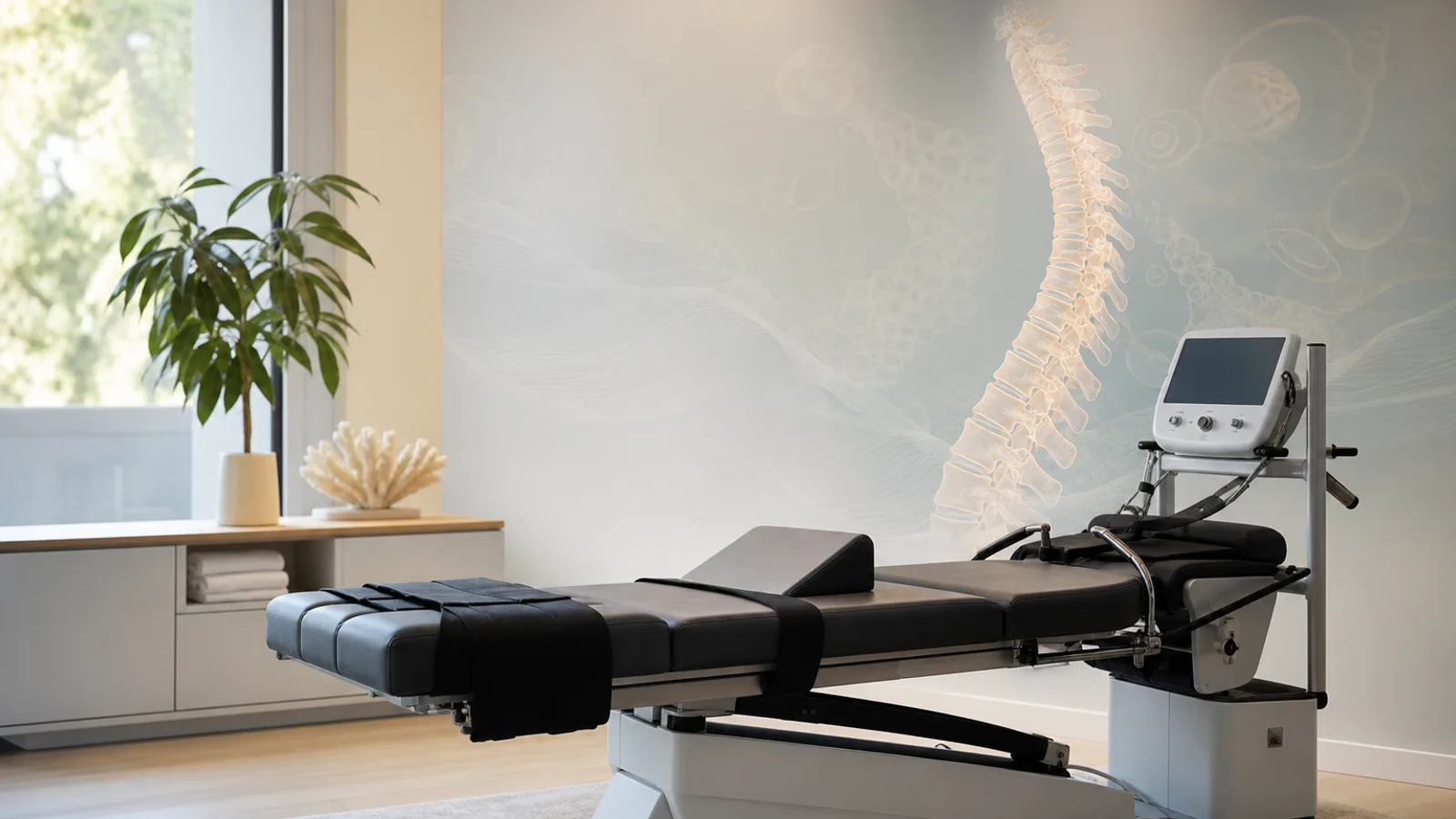
When you hear the phrase spinal decompression, it can refer to very different treatments that each follow their own clock. On one end of the spectrum is nonsurgical spinal decompression, sometimes called mechanical or axial decompression, where a computerized table or device gently applies traction to your spine. On the other end are hospital based decompression surgeries, which remove bone or soft tissue pressing on nerves. Because the techniques and settings are so different, the time commitment and recovery are different too.
For adults weighing their options, it helps to separate two questions. First, how much time do you spend actively receiving treatment, either in a clinic chair or in an operating room. Second, how long before you are back to your usual routine, including work and exercise. Research on traction devices, endoscopic procedures, and traditional decompression operations gives a fairly clear picture of these phases. A spine specialist will still tailor the plan to your diagnosis, health status, and daily responsibilities, but understanding the general timelines can help you decide which path may fit your life.
- Clarify whether you are considering nonsurgical traction or an operation.
- Think separately about treatment session length and total treatment course.
- Ask how much time you will spend in the clinic versus at home recovering.
- Review how your work and family duties line up with each option.
How long does a course of nonsurgical spinal decompression therapy take?
For clinic based mechanical spinal decompression, the time commitment is spread out over multiple short visits instead of a single procedure. In a randomized trial that used a DRX9000 device for adults with lumbar disc herniation, each session lasted about 30 minutes with intermittent cycles of traction and relaxation. Participants completed 20 sessions over 6 weeks, scheduled five days per week in the first two weeks, three times weekly in weeks three and four, and twice weekly in weeks five and six. This pattern reflects a front loaded approach, where you are in the office more often at the beginning.
A major insurer’s clinical policy on mechanical axial decompression reports similar logistics. Typical sessions in a clinic last 30 to 40 minutes and many protocols cluster around 20 visits in total, delivered several times per week. For most adults, that means planning for roughly a month and a half of recurring appointments, with each visit taking under an hour door to door. Because there is no incision or anesthesia, people usually leave the office and resume light activities the same day, although a clinician may advise temporary limits on heavy lifting or intense exercise based on symptoms and response.
- Expect around 20 nonsurgical decompression sessions in many protocols.
- Plan for a 6 week treatment window with more visits early on.
- Set aside 30 to 40 minutes per session plus travel time.
- Ask your clinician how long to wait before intense exercise after a visit.
How long do lumbar decompression surgeries usually take in the operating room?
If you are considering surgical decompression instead of, or after, nonsurgical traction, the core time block is the operation itself. A large review of adults who underwent lumbar decompression surgery without spinal fusion for spinal stenosis found that the median operative time was about 106 minutes. Individual surgeries ranged from around one hour to just over three hours, depending on how many spinal levels were treated and whether complications, such as a tear in the membrane around the nerves, occurred. Hospital stay in that series averaged about five days, although many contemporary practices now aim for shorter stays when it is safe.
Other randomized studies compare different surgical approaches. One trial that evaluated percutaneous transforaminal endoscopic decompression against a more traditional open decompression reported operative times of about 69 minutes and 66 minutes, respectively. In that research, the length of surgery did not differ significantly between the less invasive and open groups, even though incision size and hospital stay favored the endoscopic approach. These data suggest that, for many adults, you can expect to spend roughly one to two hours in the operating room for a straightforward decompression procedure, with variations based on anatomy, the number of levels, and the surgeon’s technique.
- Plan for roughly 60 to 120 minutes of operative time for many lumbar decompressions.
- Expect longer operative times if multiple spinal levels are involved.
- Understand that complications can extend both operative and recovery time.
- Confirm whether your procedure is planned as outpatient or inpatient.
Do minimally invasive decompression procedures really save time?
Many adults ask whether a minimally invasive decompression will be quicker than a more traditional operation. Research shows a mixed answer, depending on what aspect of timing you care about. In the randomized study of endoscopic versus open decompression for degenerative lumbar spinal stenosis, the actual surgical durations were similar, clustered around a little more than an hour in both groups. That means the time under anesthesia may not shrink dramatically just because the incision is smaller.
Other techniques that use implants between the spinous processes can shorten the time in the operating room. In the FELIX trial, which compared insertion of an interspinous process device to standard bony decompression, the device group had a mean surgery time of 24 minutes, compared with 43 minutes for conventional decompression. Hospital stays were similar, around 1.8 to 1.9 days. So some approaches do appear faster to perform, but your overall recovery still involves healing, physical therapy, and a gradual return to activity. When you discuss options, it helps to ask both about procedure length and realistic expectations for pain, mobility, and work resumption over the following months.
- Minimally invasive surgery does not always mean a shorter procedure.
- Some implant based decompressions can cut operative time in half in studies.
- Hospital stay may not change much even if operating room time is shorter.
- Focus on total recovery time, not just minutes under anesthesia.
How does recovery time compare between nonsurgical and surgical decompression?
From a scheduling perspective, the most important difference between nonsurgical decompression and surgery is not the minutes spent receiving treatment but the downtime afterward. With mechanical decompression on a table or traction device, you usually walk out of the clinic after a 30 to 40 minute session and can resume light daily tasks. There may be some temporary soreness or fatigue, but there is no incision to heal and no need for hospital monitoring. The tradeoff is the cumulative time of a multi week treatment schedule and the fact that research on long term benefit remains mixed, which insurer policies often note when they review coverage.
After surgical decompression, the initial time footprint is concentrated into a hospital stay and the following weeks at home. The large series on lumbar decompression without fusion reported average stays of around five days, and more recent minimally invasive protocols have shortened that for some patients, including outpatient options. Even once you are home, it can take weeks before driving, lifting, and full work duties feel manageable, and months before you know the full effect on symptoms. Your own timeline will depend on your job demands, baseline fitness, and whether other therapies, such as physical therapy or nonsurgical traction, are part of your follow up plan.
- Expect same day return to light activities with nonsurgical traction in most cases.
- Plan for days in the hospital and weeks of home recovery after surgery.
- Discuss realistic return to work dates based on your job demands.
- Ask how follow up therapies may affect your weekly time commitments.
How can you plan your week if you choose spinal decompression in Lighthouse Point?
If you are in South Florida and exploring spinal decompression, the practical question is how your calendar will look over the next several weeks. For a nonsurgical approach, a typical pattern, consistent with published trials and insurer policies, is 20 visits over about 6 weeks, scheduled multiple times per week. Each visit usually occupies well under an hour, which many adults can fit before or after work. It is still a commitment, both in terms of transportation and the need to show up consistently for the treatment course to be meaningful.
If surgical decompression is on the table, your planning shifts to arranging block time for preoperative appointments, the operation itself, and early recovery. That may mean arranging help at home and time away from driving or physically demanding tasks. At our clinic, spinal decompression is offered as nonsurgical mechanical traction, and hospital based surgeries are coordinated with outside surgical teams when appropriate. When you schedule a consultation for spinal decompression, you can expect a detailed discussion of how many sessions are likely, how long each will last, and how they can be grouped around your work and family responsibilities.
- undefined
- undefined
- undefined
- undefined
- undefined
- undefined
- undefined
- undefined
Frequently asked questions
- How long does a typical nonsurgical spinal decompression program last?
- Published protocols for mechanical spinal decompression often use 20 sessions delivered over about 6 weeks. Sessions are usually scheduled several times per week, with each visit lasting around 30 to 40 minutes on the table, so the main time cost is the repeated trips to the clinic.
- How long is each spinal decompression session on the table?
- In a randomized trial of lumbar disc herniation treated with a DRX9000 device, each decompression session lasted about 30 minutes using intermittent traction cycles. An insurer’s clinical policy similarly describes common session lengths of 30 to 40 minutes for axial or spinal decompression therapy in a clinic setting.
- How long does lumbar decompression surgery take from start to finish?
- A large review of lumbar decompression surgeries without fusion reported a median operative time of about 106 minutes, with a range from roughly one hour to more than three hours. Other trials of endoscopic and open decompression show averages around 66 to 69 minutes, so most adults can expect one to two hours in the operating room for a straightforward decompression.
- Is minimally invasive decompression faster than open back surgery?
- Research suggests that not all minimally invasive options shorten the surgery itself. One trial found that endoscopic and open decompression for lumbar stenosis had very similar operative times, both just over an hour. Another study showed that placing an interspinous process device took about 24 minutes compared with 43 minutes for standard bony decompression, so some implant based techniques can be quicker.
- How long will I be in the hospital after spinal decompression surgery?
- In a retrospective series of lumbar decompression without fusion, the average hospital stay was about five days, though the range extended from two to 15 days. More recent randomized trials of certain decompression techniques reported stays closer to 1.8 to 1.9 days, indicating that hospital time can vary with procedure type, your overall health, and local practice patterns.
- When can I go back to work after spinal decompression treatment?
- After nonsurgical mechanical decompression, many adults are able to resume light daily activities the same day, adjusting only for temporary soreness. Following surgery, return to work is usually measured in weeks, and depends on factors like how physically demanding your job is, how many spinal levels were treated, and how your early recovery progresses under your surgeon’s guidance.