Weekend athletes often want to get back on the field as quickly and safely as possible. This guide explains how PRP injections may affect return-to-play timelines, how preparation methods differ, and what to plan for before you book a treatment.
How can PRP injections change the timeline for a weekend athlete’s return to sport?
If you are a weekend runner, cyclist, golfer, or pickleball player, your main question is often how quickly you can get back to your sport without increasing your risk of another injury. Platelet rich plasma (PRP) is being studied as one option for certain acute muscle injuries, especially in the hamstrings, where time away from play can be significant. PRP is prepared from your own blood, then re-injected around the injured area under professional supervision.
Two recent meta-analyses of randomized controlled trials looked specifically at return-to-play after acute muscle injuries, many of them in athletic populations. One review that focused on hamstring strains reported that athletes who received PRP returned to play about 8.6 days sooner on average compared with controls, with mean return times of roughly 21 days in the PRP groups and 30 days in the control groups. Another analysis that pooled nine trials found a similar pattern, with PRP groups returning to sport about 7.5 days earlier on average than those having standard rehabilitation or placebo injections. Across these studies, pain during recovery was often lower with PRP, particularly in hamstring injuries, and importantly, the rate of reinjury did not appear higher than in the control groups.
However, these numbers need to be interpreted carefully. The studies were relatively small, used different injury types and PRP protocols, and many had a high risk of bias. The quality of evidence was rated from low to moderate, and there was substantial variation between trials. For a weekend athlete, this means PRP may help shorten the time to return in some cases, but it is not a guaranteed fast track back to full play. A realistic discussion with a sports medicine clinician about your specific injury type, severity, and activity demands is essential before you decide whether a PRP injection belongs in your care plan.
- Expect that PRP may shorten return-to-play by roughly a week in some acute muscle injuries, based on current studies.
- Understand that evidence quality is low to moderate, with small trial sizes and differing protocols.
- Know that reinjury rates have not been higher with PRP compared with control groups in recent analyses.
- Plan on continuing a structured rehabilitation program even if you pursue PRP therapy.
What actually happens during a PRP treatment for sports injuries?
From a weekend athlete’s point of view, a PRP visit often feels similar to a combined lab draw and injection appointment. A clinician first reviews your history, the timing of your injury, and imaging or exam findings to decide if PRP is appropriate in your situation. PRP has been studied most in acute muscle strains, such as hamstring injuries that occurred days to a few weeks earlier, and in some tendon and joint conditions, but the regulatory status for many uses remains off label, so clear consent and expectation setting are important.
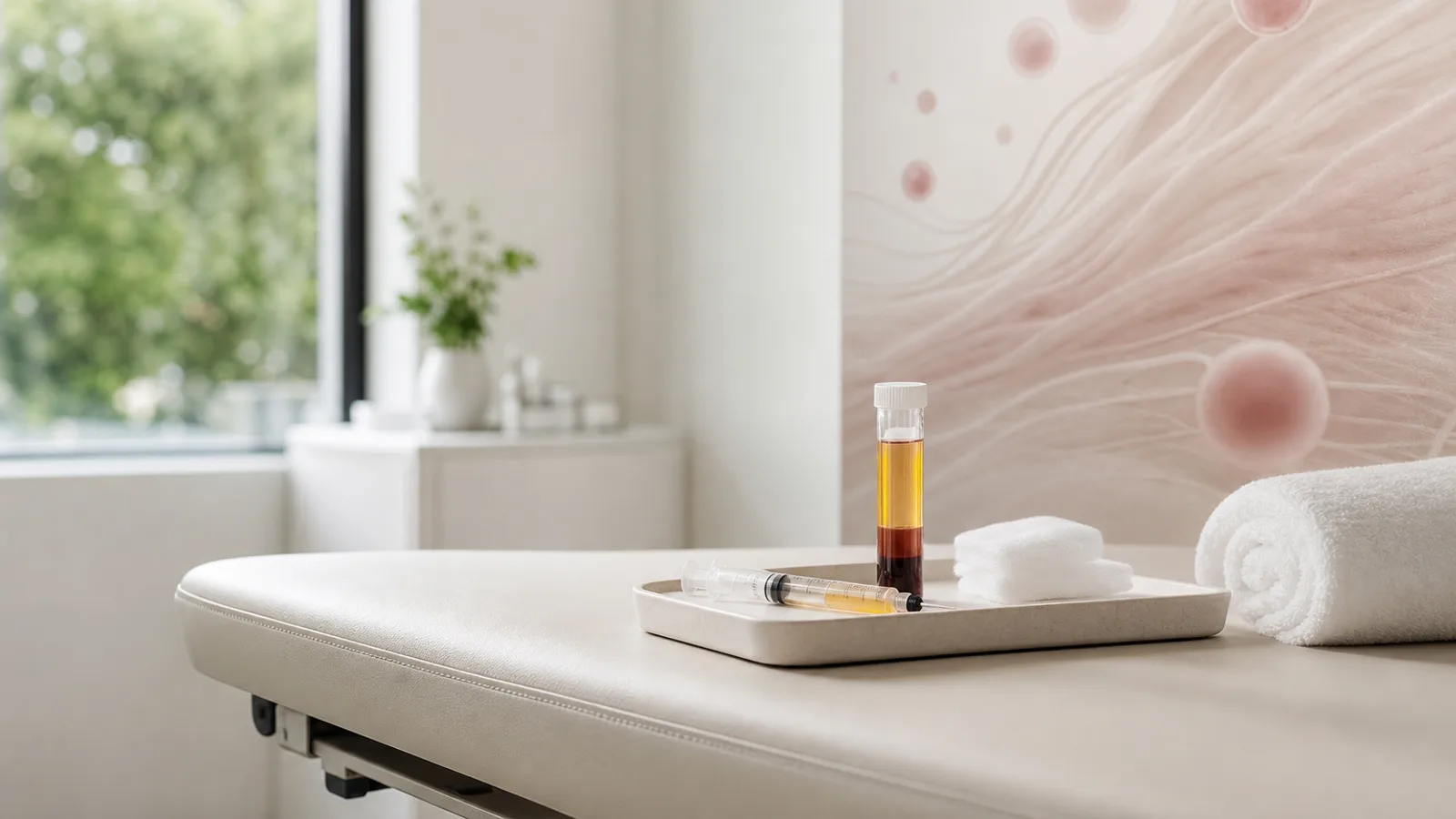
If you move forward, your blood is drawn into specialized tubes and processed in a centrifuge to separate and concentrate platelets. Depending on the system used, the process can involve a single spin or a double spin method. The platelet rich portion is then collected into a sterile syringe. Using anatomical landmarks and, often, ultrasound guidance, the clinician injects the PRP into or around the injured structure under aseptic conditions. The entire visit typically includes preparation, injection, and a short observation period afterward to monitor for immediate reactions such as discomfort or dizziness. Most patients leave with instructions to modify activity for a period and to integrate the injection into a broader rehabilitation program rather than viewing it as a standalone solution.
- You will usually have a focused exam to confirm the diagnosis and timing of your injury.
- Your blood is drawn and processed in a centrifuge to prepare the platelet rich plasma.
- The PRP is injected under sterile conditions, often with ultrasound guidance for accuracy.
- You leave with clear activity and rehabilitation guidance tailored to your injury and goals.
Why does PRP preparation method matter so much for weekend athletes?
The way PRP is prepared can influence its biological characteristics, and this is one reason that study results are not always consistent. An expert taskforce that reviewed PRP preparation methods compared commercial closed-system kits with more open, laboratory style techniques that often use a double spin process. They found that while closed systems tend to be simpler and more convenient, some of them actually produced platelet concentrations that were lower than the person’s baseline blood or achieved relatively low platelet yields. In contrast, carefully executed open, double spin methods could deliver higher platelet concentrations, which may be relevant if the goal is to deliver more growth factors to an injured muscle or tendon.
A separate technical review of dozens of commercial PRP systems found wide differences in platelet enrichment, white blood cell content, and the degree of red blood cell contamination. These biological parameters affect how inflammatory or anabolic a given PRP preparation may be, which could be particularly important in sports medicine applications. For a weekend athlete, this means that not all PRP is the same. A clinic that selects a system based on evidence, maintains consistent protocols, and matches PRP type to the tissue being treated is likely to provide a more predictable experience than a setting that treats all systems as interchangeable. It also underlines why do-it-yourself or nonclinical PRP approaches are risky: the ability to control and verify these variables is limited outside a professional environment.
How do safety, infection control, and setting differ between clinic and residential PRP use?
Although PRP is prepared from your own blood, the safety profile depends heavily on how that blood is handled. A 2025 practice review on PRP safety and infection prevention found broad variability in how facilities label samples, clean equipment, train staff, and maintain documentation. Recommended practices include using full aseptic technique, relying on single use or properly sterilized components, and carefully documenting device information and timing for each preparation. Particular attention is placed on maintaining a sterile field during injection, especially when using ultrasound guidance for precise placement near joints or deep muscle structures.
The same review highlighted that risks from device contamination and improper handling remain real even though PRP is autologous. When PRP kits are used outside regulated medical environments, for example in residential or unlicensed settings, it is much harder to ensure proper centrifuge maintenance, adherence to manufacturer instructions, and regulatory compliance. For a weekend athlete, this translates into higher infection and complication risks when PRP is performed without the infrastructure of a medical clinic. A physician supervised clinic that follows standardized protocols, trains staff on blood borne pathogen precautions, and tracks devices and outcomes provides layers of protection that are difficult to recreate at home.
- Verify that PRP is performed in a medical setting that uses aseptic technique from blood draw to injection.
- Ask how centrifuges and other devices are cleaned, maintained, and documented for each use.
- Avoid residential or unsupervised PRP use, which carries higher risks of contamination and improper handling.
- Confirm that staff are trained in infection prevention and follow manufacturer instructions for the PRP system.
What should weekend athletes plan for before booking PRP injections in South Florida?
Planning for PRP as a weekend athlete involves timing, expectations, and integration with your overall rehabilitation plan. The research on acute muscle injuries suggests that PRP is usually studied when given relatively early in the course of the injury, not months later after symptoms have fully settled into a chronic pattern. Discussing the age of your injury, your sport, and your competition schedule with a sports medicine clinician helps determine whether PRP is likely to be relevant or whether other approaches should be prioritized first.
You should also consider the practical aspects of treatment. The current evidence suggests potential benefits such as a shorter time to return to play and reduced pain for some muscle injuries, but the effect size is modest and not guaranteed. There is no reliable evidence that PRP prevents all reinjuries, and studies so far have not shown clear differences in complication rates compared with controls. In a clinic setting like ours in Lighthouse Point, PRP is physician supervised and paired with guidance on graded return to activity and strengthening, rather than offered as a quick fix. If you are exploring PRP injections as part of your recovery plan, it is helpful to bring imaging reports, a list of your sports, and a clear sense of your goals for the coming season so that the visit can focus on what is realistic for you.
- undefined
- undefined
- undefined
- undefined
- undefined
- undefined
- undefined
- undefined
Frequently asked questions
- Do PRP injections really help weekend athletes get back to sport faster?
- Recent meta-analyses of randomized trials in acute muscle injuries report that athletes receiving PRP returned to sport about 7 to 9 days earlier on average than those who had standard rehabilitation or placebo injections. The evidence quality is low to moderate with notable variation between studies, so quicker return-to-play is a possibility rather than a certainty. Your specific injury, sport, and rehab program will strongly influence your actual timeline.
- Does PRP increase the risk of reinjury in hamstring or other muscle strains?
- Across the controlled trials included in the 2026 meta-analyses, reinjury rates did not differ meaningfully between PRP and control groups. That means there is currently no strong signal that PRP raises reinjury risk compared with usual care. However, reinjury is influenced by many factors, including how you progress your training load and whether underlying strength or technique issues are addressed.
- Why should I avoid home or DIY PRP kits for sports injuries?
- Safety reviews show that infection risk with PRP is closely tied to handling practices, device cleaning, and staff training, all of which are tightly controlled in medical clinics and difficult to replicate at home. Residential or unsupervised use increases the chances of contamination, improper centrifuge use, and incomplete documentation of what was injected. For an injectable blood product, those are avoidable risks, especially when a clinic setting is available.
- Are all PRP systems the same, or does the kit choice really matter?
- Technical analyses of commercial PRP systems have found wide variation in platelet concentration, white blood cell content, and red blood cell contamination between products. Some closed kits even produce platelet levels below baseline blood if not selected and used carefully, while well-run double spin methods can achieve higher enrichment. The choice of system and protocol therefore matters, particularly when you are trying to influence healing in a specific tissue like muscle or tendon.
- How is PRP regulated for sports injury treatment in the United States?
- In general, the devices used to prepare PRP, such as centrifuges and kits, require clearance as medical devices, while the PRP itself is prepared from your own blood and is often used in an off label manner for musculoskeletal conditions. That means clinicians rely on emerging evidence and professional guidelines rather than formal drug approval for many sports applications. A reputable clinic will explain this clearly during consent and will base its protocols on current research and safety standards.
- What should I combine with PRP to get the best chance of returning to my sport?
- Studies of PRP in athletes have typically used injections alongside structured rehabilitation programs rather than as isolated treatments. Strengthening, flexibility work, and a graded return-to-running or return-to-sport plan are central to recovery whether or not you receive PRP. Working with clinicians who coordinate injections with physical therapy and training adjustments usually provides a more comprehensive approach than relying on an injection alone.